250 UV Color Changing Beads - Assorted Colors - 250 beads


Double tap Zoom
Best for Grades: PreK-8
$13.99
Quantity
Ready to Ship

Added to Your Cart
Added to Your Cart
Get it by Sep 21, 2026
Order in the next 12 hrs and 5 mins
Standards Aligned
Best for Grades: PreK-8
250 beads
Quantity
Ready to Ship
Added to Your Cart
Added to Your Cart
Get it by Sep 21, 2026
Order in the next 12 hrs and 5 mins
Standards Aligned
Ages: 3+ / Grades: PreK-8
 Adult Supervision RequiredWARNING: CHOKING HAZARD - Small parts. Not for children under 3 years of age.
Demonstrate The Presence Of Ultraviolet Light With Color-Changing Beads
Learn About the Presence of Ultraviolet Light With Color Changing-Beads
We can’t see ultraviolet rays, but kids learn they’re there with these special beads. Make bracelets or necklaces while the beads are white, and then wear them outside. The ultraviolet-sensitive pigment changes the beads from white to the assorted colors of blue, green, orange, purple, red, and yellow, even on a cloudy day! Your young scientists will learn that UV light is all around them, even when they can’t see it. Bring the beads inside and they will revert back to white since they are no longer exposed to UV rays. The beads will change over and over again without fading.
What does it teach?
UV Color Changing Beads harness the power of ultraviolet rays to change colors right before your eyes. Use the beads to teach kids about the ultraviolet radiation and the care that needs to be taken to prevent the damage it may cause. Ultraviolet (UV) light is the invisible radiation that will give you a sunburn and injure your eyes if you’re not careful.
Turn the UV beads into a cool science experiment
To turn the UV beads into a science fair project, you have to change something (identify a variable), run some more tests, and make some comparisons. Find several different types of medicine bottles and test to see which one is the most effective in blocking the the beads from the damaging UV rays. Other ideas are to examine the UV-blocking powers of different sunglasses, and to test different sunscreens by placing the beads in a zipper-lock bag and covering the bag in sunscreen.
Remember, you have to keep all other factors the same. Use the same light sources and the same number of beads. There are many ways to use UV Beads for a science fair project. We have written up a sample science fair experiment called The Sunscreen Factor that walks you through a project step-by-step. If you are interested in a simple, straightforward, and quick science fair project, be sure to check it out. It doesn’t do the work for you… you wouldn’t want that anyway, right? It does give you a template to follow to ensure that you use the scientific method, control your variables, and document your discoveries.
They Really Are a Sun Science Must-Have!
UV Color Changing Beads are the perfect tool for testing sunscreen and sunglasses, or creating beautiful crafts of art using the science of the sun. It’s no surprise that these special beads are hugely popular with both science teachers and summer camp leaders… there is just nothing like them!
Do the Beads Fade Over Time?
After we left the beads out for the entire day and brought them inside, they returned to white.
We can’t see ultraviolet rays, but kids learn they’re there with these special beads. Make bracelets or necklaces while the beads are white, and then wear them outside. The ultraviolet-sensitive pigment changes the beads from white to the assorted colors of blue, green, orange, purple, red, and yellow, even on a cloudy day! Your young scientists will learn that UV light is all around them, even when they can’t see it. Bring the beads inside and they will revert back to white since they are no longer exposed to UV rays. The beads will change over and over again without fading.
What does it teach?
UV Color Changing Beads harness the power of ultraviolet rays to change colors right before your eyes. Use the beads to teach kids about the ultraviolet radiation and the care that needs to be taken to prevent the damage it may cause. Ultraviolet (UV) light is the invisible radiation that will give you a sunburn and injure your eyes if you’re not careful.
Turn the UV beads into a cool science experiment
To turn the UV beads into a science fair project, you have to change something (identify a variable), run some more tests, and make some comparisons. Find several different types of medicine bottles and test to see which one is the most effective in blocking the the beads from the damaging UV rays. Other ideas are to examine the UV-blocking powers of different sunglasses, and to test different sunscreens by placing the beads in a zipper-lock bag and covering the bag in sunscreen.
Remember, you have to keep all other factors the same. Use the same light sources and the same number of beads. There are many ways to use UV Beads for a science fair project. We have written up a sample science fair experiment called The Sunscreen Factor that walks you through a project step-by-step. If you are interested in a simple, straightforward, and quick science fair project, be sure to check it out. It doesn’t do the work for you… you wouldn’t want that anyway, right? It does give you a template to follow to ensure that you use the scientific method, control your variables, and document your discoveries.
They Really Are a Sun Science Must-Have!
UV Color Changing Beads are the perfect tool for testing sunscreen and sunglasses, or creating beautiful crafts of art using the science of the sun. It’s no surprise that these special beads are hugely popular with both science teachers and summer camp leaders… there is just nothing like them!
Do the Beads Fade Over Time?
After we left the beads out for the entire day and brought them inside, they returned to white.
- Approximately 250 white beads that change into assorted colors with hole for stringing
- Size: 6 mm by 9 mm each, with 4 mm hole
- Colors: Beads turn red, orange, yellow, green, blue, and purple
- Full-color teaching and activity guide
We Know Standards
In the U.S alone, nearly 30% of educational standards are overhauled, revised or edited each year. Tracking these changes demands the full-time expertise and we have the tool to manage those standards, so you can trust us as the leader in standards alignment. Correlations are made for all State, National, and Common Core Standards. In addition, we have Head Start standards for early childhood. And most recently, we’ve added both National STEM Standards and Next Generation Science Standards (NGSS).
Related Items
Related Categories
Related Products
Close
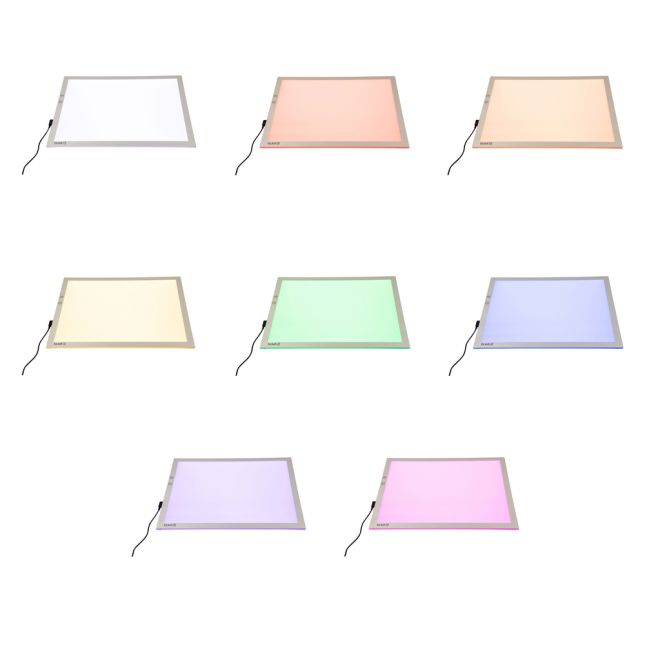
Discover color, light, and transparency with this versatile
View More
View More
Discover color, light, and transparency with this versatile LED Color Changing Light Panel designed to support hands-on exploration across art, science, and sensory learning. With vibrant color options, adjustable brightness, and a slim, portable design, this engaging resource invites children ...
View Full Product Description
View Full Product Description
Close

This is no ordinary paper. It starts in
View More
View More
This is no ordinary paper. It starts in blue or magenta color. When you place your palm on it, your handprint is left behind in white. What made this change? Thermochromic color science. One side is regular paper that you ...
View Full Product Description
View Full Product Description
Similar Products